• Contact
  • Shipping
  • Blog
  • Contact

Interview with Luciano, Mister Leather Italia 2026

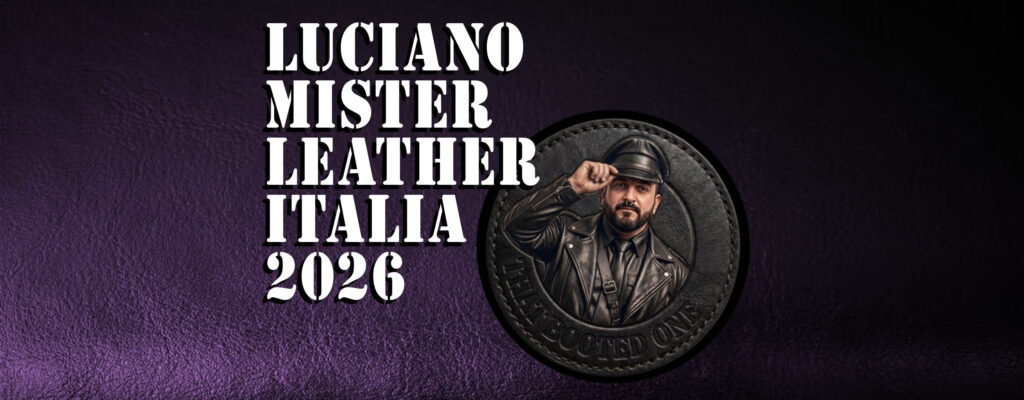
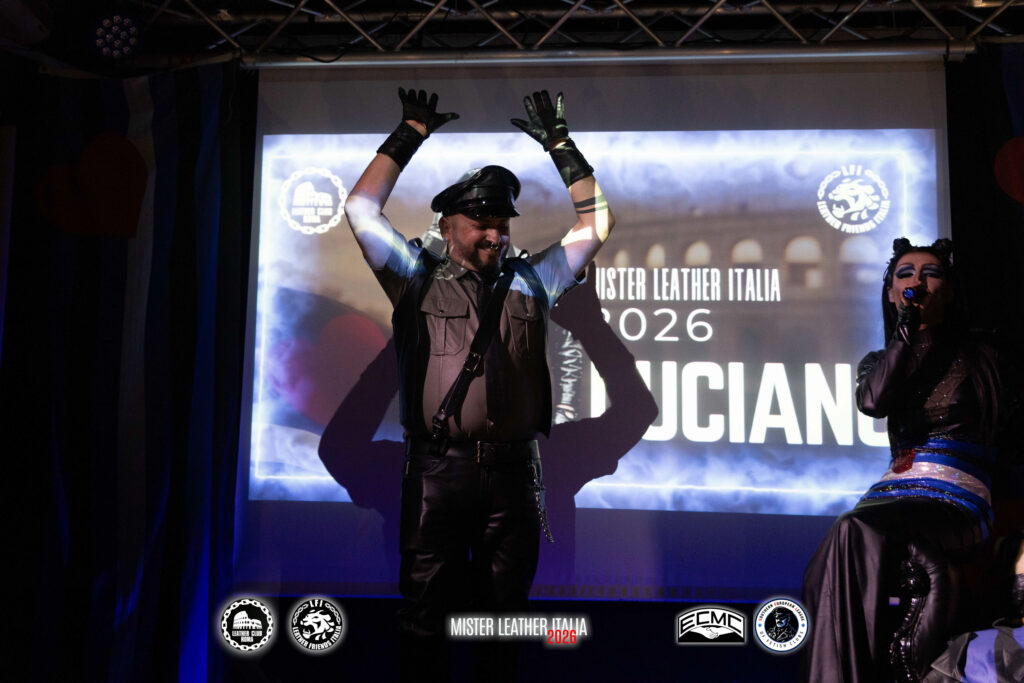
We had the pleasure of speaking with Luciano, known as ThatBootedOne, who was recently elected Mister Leather Italia.

Behind the title is a curious, empathetic person who is deeply connected to his community. Luciano sees leather not only as an aesthetic or a fetish, but as a space for belonging, self-expression, and personal growth. It is a place where people can feel free to be themselves, but also a world that requires respect, listening, consent, and responsibility.

His journey began around twenty years ago during a work experience in Finland and developed gradually through encounters, experimentation, and personal discovery. Today, Luciano wants to use his title to create connections, make leather culture easier to understand, and help people approaching it for the first time feel less alone or intimidated.

What emerges from our chat is an open and human approach. Luciano does not try to present the community as a perfect or uniform world, but as a home with many rooms, made up of different people, identities, bodies, generations, and experiences.

In this interview, we discuss his relationship with leather, his passion for boots and rubber, and the value of clothing and rituals. We also talk about inclusion, education, visibility, and dialogue between generations. We also talk about poppers, including the importance of discussing them openly, without stigma and with responsible information.

Let us get to know Luciano and discover the kind of community he wants to represent as Mister Leather Italia 2026.

A Home with Many Rooms

Q: For those who do not know you yet, who is Luciano inside and outside the leather world?

A: I am @ThatBootedOne, I live in Rome, and I began exploring the kinky and fetish world around twenty years ago. I am a curious and empathetic person, and I feel strongly connected to the values of the leather and fetish community.

Outside the scene, I work in marketing and have a great passion for travel, communication, and people. Within the leather world, I try to share what I have learned during my journey, especially with those who are approaching the community for the first time.

Leather is my home, but it is a home with many rooms. I have a strong passion for boots, from military combat boots to ranger-style boots, which I consider a natural extension of the leather aesthetic. More recently, I have also been exploring the rubber world with curiosity and the ways in which these two worlds can influence each other.

A Title as a Starting Point

Q: Congratulations again on becoming Mister Leather Italia. What did winning the title mean to you, and how do you see your role within the community?


A: Winning the title was a unique experience that went far beyond personal recognition. Throughout the election weekend, I felt a great deal of warmth and support from the community. It is an energy that I will carry with me.

For me, the title is above all a responsibility. I do not see it as a final achievement, but as a starting point and an opportunity to give the community a voice and tell its story in a more complete and human way.

I would like to help overcome some of the stereotypes that still surround the leather world and show that behind the aesthetic there are people, relationships, values and different stories.

I like to think of my role as that of an ambassador who listens and creates connections. I do not want to represent only those who are already part of the scene, but also to build a bridge towards those who observe it from the outside or approach it with curiosity and a little apprehension.

Q: When did you discover the leather and fetish world? Was there a moment when you understood that it was part of your identity?

A: It was a gradual discovery that began around twenty years ago during a work experience in Finland. That was where I first encountered a world I knew very little about, and it interested me precisely because it was so different from what I was used to.

At first, it was mainly about curiosity and experimentation. I began trying on clothing and accessories, and I started to understand that certain codes, aesthetics, and dynamics appealed to me not only visually but also resonated with a deeper part of who I was.

The decisive moment came when I found a space where I did not feel the need to explain or justify myself. I felt seen and accepted for who I was. That was when I understood that it was not a phase or simply an interest, but a real and fulfilling part of my identity.

Beyond Aesthetics: The Values of Leather Culture

Q: What does leather culture represent to you today, and which values do you consider fundamental?

A: Leather culture is first and foremost a community. It is a space where people can recognize one another, meet, and form connections. It is not only an aesthetic or a collection of visual codes. It is also a language through which people express identities, experiences, and a sense of belonging.

For me, it has also been a tool for personal growth. It has allowed me to express parts of myself that I felt I had to reduce or filter elsewhere.

Among its fundamental values, I would place consent first. I understand consent not only as a yes or a no, but as an ongoing dialogue. Alongside it are trust, personal responsibility, and the ability to understand and communicate personal boundaries.

Finally, I consider mutual care essential. This means listening, being present, and paying attention to the people with whom we share spaces and experiences. When these values are respected, the community can become a genuine support network.

Q: Many people see fetish only from the outside, perhaps with curiosity or prejudice. What do you think is the most misunderstood aspect of the leather world?

A: The main misunderstanding is the idea that it is only something provocative, superficial, or perverse. Leather culture has a history, its own codes, and a strong sense of community.

From the outside, people often focus on the image and overlook the human side: the friendships, support, and relationships that can develop within the scene. It is not necessarily a cold or distant environment. On the contrary, it often requires very clear communication and close attention to trust and respect.

Another mistake is to imagine leather as a uniform world. It includes very different people, bodies, identities, preferences, and personal journeys. Reducing everything to a single stereotype means overlooking much of its richness.

Q: How important are visibility, acceptance and inclusion within leather and fetish spaces, especially for people approaching them for the first time?

A: They are fundamental because a first experience can profoundly influence how a person perceives the community.

People who approach this world for the first time often do so with curiosity, but also with a certain vulnerability. Finding a respectful and non-judgmental environment allows them to observe, ask questions, and take the time to understand how they want to participate, without feeling that they must prove anything.

Inclusion also means representing and valuing the diversity that already exists within the scene: different ages, bodies, identities and experiences. Seeing this variety helps people recognize themselves and understand that there is no single way to experience leather or fetish.

Clothing as Identity and Communication

Q: In the leather world, clothing, accessories, and rituals often carry a great deal of meaning. What role do these elements have for you?

A: They are tools for expression and communication. They are not only about aesthetics but can also communicate identity, belonging, and personal journeys.

A jacket, a pair of boots, or an accessory connected to the Hanky Code can communicate something without words. There are shared codes, but each person interprets and combines them in a personal way. This is what keeps leather clothing alive: there is tradition, but also a great deal of individuality.

Ritual also has an important role. Certain gestures and moments create a connection with the history of the community and with the people who are part of it. I do not see ritual as something rigid, but as something that gives meaning to experiences and celebrates a personal journey.

Poppers, Information and Responsibility

Q: In the fetish world, poppers and sexuality are often part of the conversation. In your view, what role do poppers have in gay, leather or fetish culture, and how important is it to discuss them openly and responsibly?

A: Poppers are part of the reality of some gay, leather, and fetish contexts, as well as the personal lives of many people. For this reason, I believe it is important to discuss them openly, without stigma but also without treating the subject lightly.

Information, attention to health, and respect for individual choices are fundamental. Speaking responsibly also means recognizing that risks can exist, especially when clear information is lacking or people act without understanding their own limits.

The community can play a positive role by creating spaces where people can ask questions and receive accessible, non-judgmental information.

Normalizing the conversation does not mean trivializing the subject. It means helping people make more informed choices.

Education, Dialogue and New Generations

Q: What do you think is missing from the leather or fetish scene today in terms of community, education, or visibility? What gives you hope for the future?

A: I believe that accessible resources are still lacking for people who want to learn about leather culture but do not know where to begin. Codes, symbols, and dynamics can appear complex, especially when people who have been part of the scene for many years take them for granted.

It would be useful to create more opportunities for discussion, workshops, informative content, and mentorship. The purpose would not be to establish rigid rules, but to provide points of reference and pass on the history of the community.

Another important issue is dialogue between generations. People who have been part of the scene for a long time bring experience, history, and knowledge. Those who are arriving today bring new language, sensitivities, and questions. Bringing these perspectives together can help prevent both the loss of historical memory and the risk of remaining tied to models that no longer represent everyone.

What gives me hope is seeing more people who are willing to listen, question themselves, and work towards a more open scene. I believe that the future of leather depends on its ability to evolve without losing its roots.

Q: What advice would you give to a curious person who wants to approach the leather world but is still afraid to explore it?

A: I would tell them to take their time, observe, and learn without pressure. Attending a public event or social gathering can be a simple first step towards getting to know the environment without feeling obliged to do anything.

It is normal to feel intimidated by codes, clothing, or dynamics that may initially appear very defined. However, there is no need to understand everything immediately or conform to a predetermined model.

I would also recommend talking to people, asking questions, and listening to different experiences. The best way to overcome many fears is to discover the human side of the community.

Above all, it is important to remember that there is no single correct way to experience leather. Everyone can find their own place and proceed at their own pace while remaining true to themselves.


Building the Future of the Community

Q: Following this title, what are your goals or hopes for the future? Where can people follow you if they want to learn more about your journey?

A: I would like to help make leather culture more visible and understandable, both within and outside the community. I would like to work on awareness, information, and dialogue projects that show not only the aesthetic, but also the values, relationships, and sense of belonging that define this world.

I also want to support people who are at the beginning of their journey by offering points of reference and helping to create welcoming environments. Even sharing an experience or answering a question can make a real difference to someone who does not yet know how to approach this world.

People can follow me on social media as @ThatBootedOne. I share my journey, events, and initiatives connected to the community, while also trying to open conversations and offer a transparent view of this world.

Conclusion: An Open and Thoughtful Voice for the Leather Community

Luciano represents a vision of leather founded on belonging, but also on responsibility. Throughout his answers, he repeatedly highlights the importance of listening, creating connections, and making the community more accessible to those who still know it only from the outside.

His message is clear: leather is not only about what people wear or what others see. It is a culture built through relationships, trust, consent, history, and freedom of expression. It is also a space that continues to evolve through dialogue between different experiences, identities, and generations.

We particularly appreciated his commitment to education and information. These are values that we at Poppers-Online also share deeply. We believe that speaking openly about fetish, sexuality, and poppers is essential for challenging stigma, reducing misinformation, and helping people make more informed choices.

Providing information does not mean judging people or telling them how to experience pleasure. It means offering clear knowledge, creating space for honest questions, and always placing well-being, respect, and personal responsibility at the centre.

We thank Luciano for sharing his journey, his values, and his vision of community with us. We wish him a year filled with encounters, projects, and new connections as Mister Leather Italia.

Follow Luciano, ThatBootedOne, on Instagram, Facebook or X.